 SIRUITE DRILLING TOOLS LIMITED

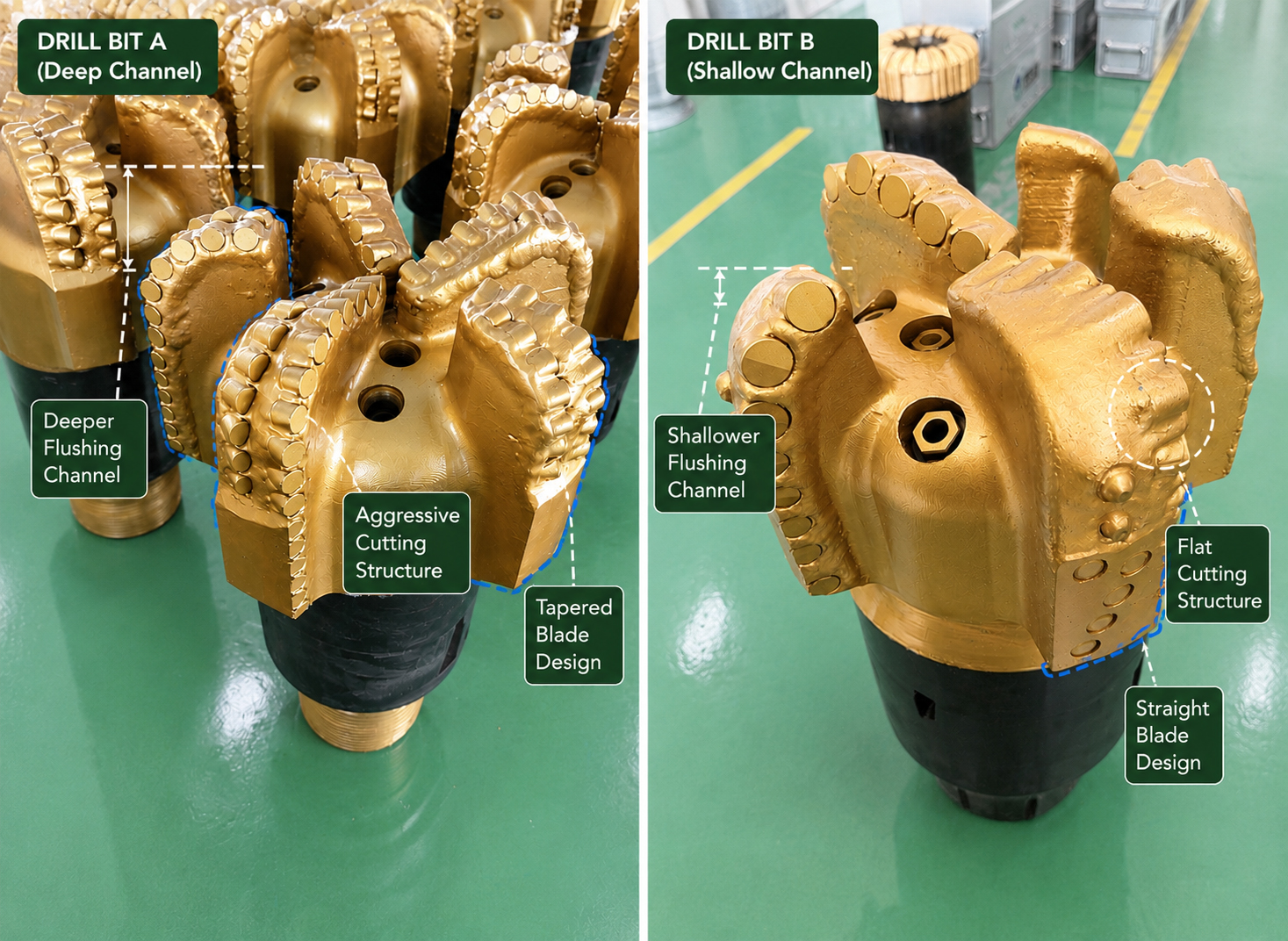
In modern drilling operations, the design of a PDC (Polycrystalline Diamond Compact) drill bit directly determines drilling efficiency, footage rate, stability, and overall drilling cost. Whether in water well drilling, geothermal drilling, mining exploration, or oil & gas applications, selecting the right PDC bit structure can dramatically improve penetration rate and bit life.This article explains how different PDC bit blade shapes, cutter geometries, and junk slot depths influence drilling performance, while also helping drilling contractors and procurement specialists better understand how to choose the correct PDC bit for specific formations.
What Is a PDC Drill Bit?
A PDC drill bit is a fixed-cutter drill bit that uses synthetic diamond cutters to shear and crush rock formations. Compared with traditional tricone bits, PDC bits generally offer:
- Higher ROP (Rate of Penetration)
- Longer service life
- Lower drilling cost per meter
- Better stability in suitable formations
- Faster drilling in soft to medium-hard formations
Today, PDC drill bits are widely used in:
- Water well drilling
- Oilfield drilling
- Geothermal drilling
- Mining exploration
- HDD drilling
- Construction foundation drilling
The blade profile of a PDC drill bit is one of the most important structural factors influencing drilling behavior. Different blade geometries perform differently depending on formation hardness, abrasiveness, and drilling conditions.
1. Straight Blade PDC Bits
Straight blade designs are commonly used in softer formations where aggressive cutting action is required.
- Advantages
Better directional stability
Strong cutting efficiency
Smooth torque response
Best Applications:Clay,Shale,Sandstone,Soft limestone,Water well drilling
- Disadvantages
More vibration in interbedded formations
Faster wear in abrasive rock
For many water well drilling contractors, straight blade PDC bits remain the preferred choice because they provide excellent drilling speed and lower operational costs.
2. Spiral Blade PDC Bits
Spiral blade PDC bits are designed to improve cuttings evacuation and reduce vibration during drilling.
- Advantages
Reduced stick-slip vibration
Improved cuttings flow
Smoother drilling in mixed formations
Best Applications
Medium-hard formations
Interbedded formations
Geothermal drilling
Directional drilling
- Disadvantages
More complex manufacturing process
Spiral blade designs are increasingly popular in geothermal and deep water well drilling because they maintain smoother drilling performance under changing formation conditions.
3. Long Blade vs Short Blade PDC Bits
Long blades provide better gauge protection and improved bit stability:
Longer bit life
Better hole quality
Reduced gauge wear
Suitable For
Long interval drilling
Abrasive formations
Hard sandstone
Faster drilling speed
Higher instantaneous penetration
Suitable For
Soft formations
Shallow wells
Fast drilling projects
However, short blade bits may experience higher vibration and faster cutter damage in hard rock formations.
How Different PDC Cutter Shapes Affect Drilling Performance
The PDC cutter is the core cutting element of the drill bit. Cutter geometry strongly affects rock-breaking efficiency, durability, and drilling stability.
1. Flat Face PDC Cutters
Flat cutters are the most widely used type in the drilling industry.
- Advantages
High penetration rate
Lower manufacturing cost
Best Applications
Soft to medium formations
Water well drilling
General-purpose drilling
Limitations
Lower impact resistance
Faster edge chipping in hard rock
Flat cutters are ideal when maximum drilling speed is the priority.
2. Domed PDC Cutters
Domed or convex cutters are designed for higher impact resistance.
- Advantages
Better resistance to chipping
Longer service life in hard formations
Best Applications
Hard rock drilling
Abrasive formations
Geothermal wells
Limitations
Lower aggressiveness
Reduced penetration rate
These cutters are commonly used in premium PDC bits designed for challenging formations.
3. Ridged and Shaped PDC Cutters
Advanced shaped cutters, including ridged and conical designs, are becoming increasingly popular in modern drilling technology.
- Advantages
Lower torque fluctuation
Improved thermal stability
Best Applications
Complex formations
High-performance drilling
Oilfield applications
Although more expensive, shaped cutters often deliver lower overall drilling cost due to longer bit life and faster drilling.
How Junk Slot Depth Affects PDC Bit Performance
The junk slot, also called the waterway or flow channel, plays a critical role in cuttings removal and cooling.
Improper junk slot design can severely reduce drilling efficiency.
1. Deep Junk Slot Design
Deep junk slots provide larger fluid flow channels.
- Advantages
Improved cooling
Reduced bit balling
Better performance in sticky formations
Best Applications
Clay formations
Water wells
High-volume drilling fluid systems
- Disadvantages
Lower structural rigidity
Deep waterways are especially important in water well drilling, where cuttings volume is large and hole cleaning is critical.
2. Shallow Junk Slot Design
Shallow junk slots increase blade strength.
- Advantages
Better durability
Higher impact resistance
Best Applications
Hard formations
Abrasive drilling
High-WOB applications
- Disadvantages
Increased risk of bit balling
If the junk slot is too shallow, cuttings accumulation can reduce drilling efficiency and increase torque.
Balancing Blade Design, Cutter Shape, and Waterway Depth.The best PDC drill bit is not simply the most aggressive design. Successful drilling requires balancing:Penetration rate,Durability,Stability
Cooling,Cuttings evacuation,Formation adaptability.For example:
Formation Type Recommended Blade Cutter Type Junk Slot Design
Soft Clay Straight Blade Flat Cutter Deep Junk Slot
Sandstone Spiral Blade Flat or Ridged Cutter Medium Depth
Hard Limestone Spiral Blade Domed Cutter Shallow Slot
Geothermal Rock Long Spiral Blade Domed/Shaped Cutter Medium Slot
Why Proper PDC Bit Design Matters
An improperly designed PDC bit can cause:
Low drilling speed,Excessive vibration,Premature cutter failure,Poor hole cleaning,High drilling costs,Short bit life.
A properly engineered PDC bit can significantly improve:
Drilling efficiency,Bit durability,Hole quality,Overall project profitability.
PDC drill bit performance depends heavily on blade geometry, cutter shape, and junk slot depth. Different drilling environments require different structural configurations.
Understanding these design principles helps drilling companies choose the right PDC bit for Water well drilling,Geothermal drilling,Mining exploration,Oilfield drilling,HDD applications.
As drilling technology continues to evolve, advanced PDC cutter technology and optimized hydraulic structures will play an even greater role in improving drilling efficiency and reducing operating costs.
For contractors and distributors looking for reliable PDC drill bits, choosing the correct bit structure for the target formation is far more important than simply choosing the cheapest option.